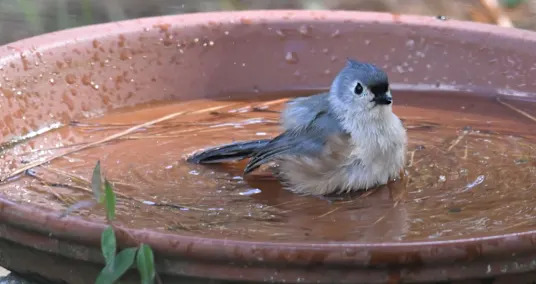
While birdbaths can be a great way to attract birds to your yard without buying a feeder, sometimes a source of water alone isn't enough to make your feathered friends stick around for long. By growing marigold (Tagetes spp.) and cosmos (Cosmos bipinnatus) flowers around your bath, you will make it even more enticing to your local birds, as well as other pollinators. Cosmos are gorgeous plants with pink, purple, and white flowers that are known to bring pollinators such as butterflies and birds to your yard with their bright blooms. Marigolds will make your outdoor space look stunning with their yellow and orange blooms, and these flowers are also particularly attractive to birds due to the tasty seeds they produce. Different varieties of birds, including cardinals and finches, will snack on marigold seeds, allowing you to bring more kinds of feathered friends to your bath.
Both of these flowers are annuals, though they will self-seed. By planting some cosmos and marigolds together, you can keep birds hanging around your birdbath throughout summer and expect the flowers and wildlife to return each year from the seeds. Because they grow well as companions, cosmos and marigolds are a great way to create a bird-friendly garden at home. When planting these vibrant flowers around your birdbath, you'll need to ensure that the location of the bath will also help your plants to thrive. Consider the sunlight and soil conditions before choosing the best spot for your birdbath.
Read more: Unique Ways To Reuse 13 Old Household Items In Your Garden Instead Of Tossing Them
Growing cosmos and marigolds as companions by your birdbath

Both marigolds and cosmos flowers originate from Mexico and have similar sunlight and soil preferences, making them work well as companions. Marigolds and cosmos are both known to attract beneficial insects, and marigolds may help with pest control to an extent. These factors make cosmos good companion plants for marigolds and vice versa. When you plant your flowers, ensure the birdbath is situated in a sunny spot in your yard. These flowers prefer bright, full sunlight throughout the day, so it's important that your birdbath isn't in a heavily shaded area.
When growing these flowers directly in the ground at the base of your birdbath, make sure the soil is a type that drains well. Once you've found the best spot for your bath, you can plant the flowers around it. When choosing specific types of marigolds and cosmos, consider how tall they'll grow and try to pick varieties that will complement each other in color and height. Deadheading marigolds and cosmos can help them to keep producing flowers for longer, but letting them spread their seeds provides birds with a natural source of food. Creating this spot where birds have access to water, food, and plants turns your yard into a wonderful habitat for your feathered friends and makes sure they keep visiting your birdbath.
Want more design inspiration? Join our free newsletter to get the best home and garden tips, design hacks, and DIY projects delivered right to your inbox. You can also add us as a preferred search source!
Read the original article on Hunker.
LATEST POSTS
- 1
 Volunteers aiding humpback whale stranded in Baltic get death threats
 - 2Several Israelis attempt to cross into Gaza, escorted back to Israel by IDF
- 3Higher cost, worse coverage: Affordable Care Act enrollees say expiring subsidies will hit them hard
- 4I spent the last year transforming my life. Becoming a Rockette for a day made me confront a fear I couldn't shake.
- 5The Most Important Crossroads in Olympic History



- Display of Netanyahu's severed head 'incites public to murder PM', Likud says in official complaint
- World’s tallest bridge and biggest museum named ‘greatest places of 2026’
- German unemployment rate falls to 6.4%, but 3 million still jobless
- New heart disease calculator predicts 30-year risk for young adults
- Which Espresso Do You Like Best? Vote
- Interstellar comet 3I/ATLAS will fly by Earth Friday. Here are the latest images
- The Best 20 Photography Instagram Records to Follow
- Etymological Investigation Disclosed: A Survey of \Dominating New Tongues\ Language Learning Application
- Bronze Age "City of Seven Ravines" unearthed in central Asia after 3,500 years